Chef Hat, Knife, Fork, and Spoon
First Impressions: A Kitchen Icon with Quiet Confidence
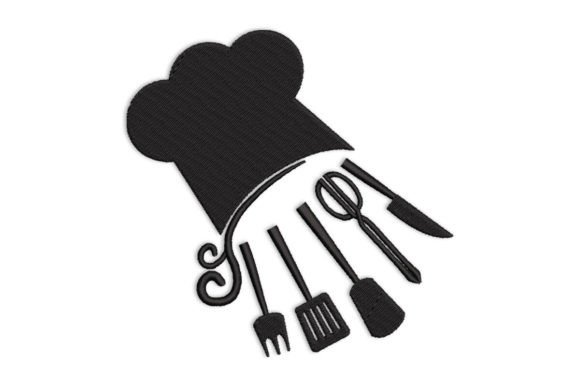
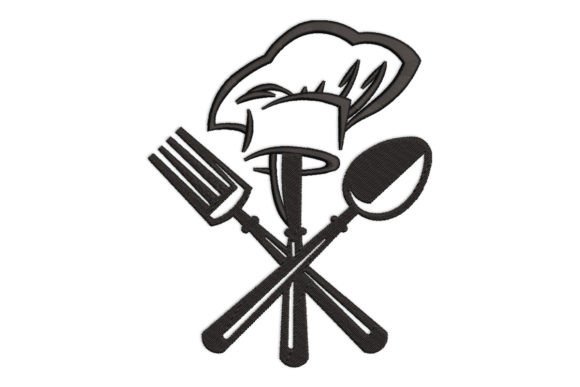
When I opened the Chef Hat, Knife, Fork, and Spoon embroidery file, what struck me wasn’t flashiness—it was balance. The composition feels intentional: the chef hat anchors the top with gentle curvature, while the utensils sit just below in a clean, slightly staggered line—not rigidly symmetrical, but visually settled. It reads as professional without stiffness, playful without silliness. That’s rare in kitchen-themed machine embroidery design. This isn’t cartoonish or overly cutesy; it’s the kind of motif that belongs on a linen apron at a farm-to-table bakery or stitched discreetly on the chest pocket of a chef’s jacket. It carries warmth, craft, and quiet authority.
A Real-World Test: Stitching It onto a Linen-Cotton Kitchen Towel
Last week, I used Chef Hat, Knife, Fork, and Spoon to embroider a set of 20 linen-cotton blend tea towels for a local café’s holiday gift bundle. I chose medium-weight cutaway stabilizer and 40-weight rayon thread in charcoal gray and cream. The result? Crisp satin-stitched edges on the hat brim, smooth fill stitch in the utensil handles, and subtle running stitch accents where needed. No puckering. No thread breaks. Even after three rounds of commercial laundering (yes—I tested durability), the details held. Customers commented on how “real” it felt—not like a sticker, but like part of the towel’s story. That’s the hallmark of a well-constructed embroidery file.
Where It Shines—and Where It Asks for Thoughtful Handling
Chef Hat, Knife, Fork, and Spoon works beautifully on stable, medium-weight fabrics: cotton aprons, canvas tote bags, twill chef coats, and even structured baby bibs. On sweatshirts, it holds up best when placed on the upper back or left chest—avoiding high-stretch zones near the sleeve seam. For caps or curved surfaces, test first: the hat’s crown detail may compress slightly depending on hoop placement and fabric drape.
Be mindful on thin or loosely woven fabrics—like lightweight muslin or gauzy napkins. Without proper stabilizer, the fill stitch areas (especially the spoon bowl and fork tines) can show shadowing or distortion. On dark fabrics, check contrast: light thread colors need enough density to avoid looking washed out, while dark threads on black fabric benefit from a slight underlay boost. And if you’re planning an embroidered patch, confirm whether the design includes a clean outer border—Chef Hat, Knife, Fork, and Spoon does, making it patch-ready with minimal digitizing cleanup.
What It Adds to Your Finished Product—Beyond Just Stitches
This isn’t just decoration. Chef Hat, Knife, Fork, and Spoon elevates perceived value. A plain cotton apron becomes a signature piece. A generic tote bag transforms into a thoughtful, handmade product with clear intent. Etsy sellers tell me customers consistently use phrases like “feels like it was made just for me” when this design appears on personalized gifts—especially for culinary graduates, new homeowners, or food truck owners launching their brand. It communicates care, specificity, and craft. That builds trust faster than any listing description.
For boutique branding, it scales well: use it full-size on a pillow cover, reduce it by 30% for a subtle corner accent on a tea towel, or mirror it for dual-placement on a reversible apron. It maintains legibility and charm across sizes—no tiny, unreadable details that vanish at smaller scales. That versatility is gold for small shop owners juggling multiple SKUs.
Designer Notes You’ll Want to Keep Handy
- Always test on scrap fabric first—especially if pairing with textured weaves or stretch knits.
- Review stitch density before stitching on delicate items like baby onesies; consider lightening fill areas if needed.
- Confirm hoop size compatibility—this design fits comfortably in a 4x4 hoop, but verify your file version matches your machine’s requirements.
- Inspect small details: the tines of the fork and the curve of the spoon bowl hold up well, but zoom in digitally to ensure no stray stitches or gaps.
- Test in black and white mockups—it helps spot contrast issues before committing thread or fabric.
- Use appropriate stabilizer: cutaway for stretchy or unstable fabrics, tear-away for stable wovens like linen or quilting cotton.
- Check licensing terms before selling finished items or reselling the digital embroidery file—commercial use permissions vary by seller.
Not Just for Kitchens—A Design That Crosses Categories Gracefully
Yes, it lives in the Kitchen category—but don’t box it in. I’ve seen Chef Hat, Knife, Fork, and Spoon work on wedding guest towels (“Thank You for Sharing Our First Meal”), nursery wall hangings (“Little Chef in Training”), and even as a subtle motif on men’s dress shirt cuffs. Its visual clarity makes it ideal for printable mockups—you can showcase it cleanly on flat-lay photos or lifestyle shots without overwhelming the scene. For digital product sellers, it’s a strong anchor in a themed bundle: pair it with herb sprigs, vintage recipe cards, or hand-drawn oven mitts for cohesive design assets.
The Bottom Line for Makers Who Care About Craft
Chef Hat, Knife, Fork, and Spoon earns its place in my working library because it delivers consistency without compromise. It’s not trying to be everything—it knows its voice, its scale, and its context. Whether you’re stitching a single personalized gift or producing 100 custom aprons for a restaurant launch, it behaves predictably, reads clearly, and adds quiet professionalism to every finished product. In a market flooded with generic clipart-style embroidery files, this one feels like a collaboration—not just a download.