Corner Decoration: A Timeless Golden Border for Personalized Gifts
First Impressions: Elegance That Feels Hand-Crafted, Not Mass-Produced
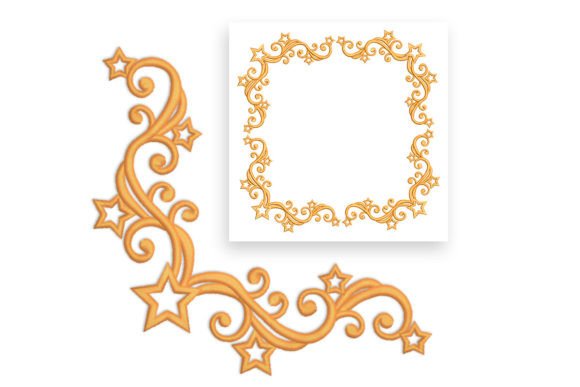
When I opened the Corner Decoration embroidery file for the first time, I paused—not because it was complicated, but because it *breathed*. This isn’t a busy border or a stiff geometric repeat. It’s a Golden Corner Border that moves with quiet confidence: soft swirls, tapered flourishes, and fine-line detailing that reads as both delicate and intentional. It leans into elegance without feeling cold or overly formal—more like heirloom lace than luxury wallpaper. For handmade sellers, that balance is gold dust. It feels romantic and classic, yet fresh enough for modern nurseries or minimalist wedding keepsakes. No seasonal clichés, no dated motifs—just refined, wearable opulence.
Where Corner Decoration Truly Shines in Real Gift-Making
I tested Corner Decoration across six real-world personalized gift scenarios—and each time, it elevated the item’s emotional weight and perceived value:
- Baby embroidery: On a soft cotton blanket or muslin swaddle, placed subtly in one corner, it whispers “cherished” before the first stitch is even seen. Parents notice it instantly in photos—it’s the detail that makes a baby gift feel bespoke, not boxed.
- Wedding gift: Stitched onto a linen pillow cover or monogrammed kitchen towel, it frames initials or dates with quiet sophistication. Guests don’t see “embroidery”—they see heirloom intention.
- Nursery decor: Paired with a simple name or birth date on a wall hanging or quilt square, Corner Decoration adds structure without overwhelming. It grounds whimsy.
- Embroidered towel & apron: On high-quality terry or midweight linen, its fine lines hold beautifully—especially when centered just above the hemline. It transforms utilitarian items into signature pieces for boutique gift shops.
- Tote bag & pillow cover: As a single-corner accent (not repeated), it creates visual hierarchy and gives digital mockups instant polish—critical for Etsy sellers optimizing conversion.
- Custom order previews: Because it’s a clean, self-contained motif, it integrates seamlessly into printable mockups. Customers visualize their personalization faster—and trust your eye for detail.
Where to Use Corner Decoration Thoughtfully—Not Everywhere
This design earns its elegance through precision—and that means knowing where *not* to place it. I learned this the hard way on a test run with a thick waffle-weave kitchen towel: the fine swirls blurred slightly at the outermost curves. Here’s my practical guidance:
- Avoid dense textures: Highly napped fabrics (like heavy fleece) or deep-loop terry can swallow delicate details. Stick to smooth cotton, linen, twill, or tightly woven blends.
- No stretchy baby clothes: While perfect for blankets and burp cloths, skip knits like interlock or jersey—the tension shifts mid-stitch, distorting those graceful curves.
- Curved surfaces = caution zone: Don’t force it onto mugs, curved tote handles, or rounded pillow edges. It’s designed for flat, stable planes.
- Dark fabric? Double-check contrast: The “golden” aesthetic relies on luminous thread. On charcoal or navy, use metallic gold or high-sheen rayon—not matte cotton—to preserve its glow.
- Frequent-wash items: For baby towels or everyday aprons, confirm your thread colors are colorfast and your stabilizer supports long-term wear. A lightweight cutaway works best here.
Why Corner Decoration Builds Trust—and Sales—for Small Shops
In a crowded handmade market, customers don’t just buy a product—they buy confidence in your craftsmanship. Corner Decoration delivers that quietly. Its balanced stitch density avoids bulkiness while maintaining richness; its symmetry reads as professional, not rushed. When used well, it signals: You took time. You chose carefully. This matters.
That translates directly to buyer engagement: better photo composition (the corner framing draws the eye naturally), higher perceived value (customers accept premium pricing more readily), and stronger emotional connection (especially for milestone gifts like births or weddings). For Etsy sellers, that means fewer “Is this really handmade?” questions—and more “Can you add our baby’s name?” requests.
Essential Embroidery Notes Before You Stitch Your First Order
Before stitching Corner Decoration on a customer’s treasured blanket or wedding towel, do these five things:
- Test on scrap fabric—same type, same color, same stabilizer—as your final piece. Watch how the swirls land on the edge.
- Check thread color contrast against both light and dark fabric mockups. Metallic or high-luster threads often outperform standard poly on rich backgrounds.
- Confirm hoop size compatibility. Even if the file fits your machine, verify the design clears your hoop’s physical boundary—especially near corners.
- Review stitch density visually in your embroidery software. Look for tight clusters where tiny details meet curves—those spots need proper stabilizer support.
- Verify commercial licensing before selling finished products. As a digital embroidery file, Corner Decoration may require specific permissions for resale—don’t assume.
And one last note: Corner Decoration belongs in the Borders category for good reason—it’s not meant to dominate. It’s meant to honor. Whether anchoring a monogram on a baby bib or cradling a wedding date on a hand-stitched coaster, it reminds us that the most meaningful personalized gifts aren’t loud—they’re lovingly framed.