Gingerman FSL: A Sparkling Holiday Embroidery Staple
As someone who’s stitched hundreds of holiday designs for clients, Etsy shops, and boutique merchandise—everything from baby onesies to linen tea towels—I opened Gingerman FSL with quiet curiosity. Not hype. Not hope. Just the steady, practiced eye of a designer who knows how easily charm can collapse under poor digitizing or over-ambitious lacework. What I found wasn’t just “adorable”—it was intentional. This gingerbread man isn’t shouting for attention; he’s winking from a mug of cocoa, metallic sheen catching the light just right.
First Impressions: Joy That Holds Up Under the Needle
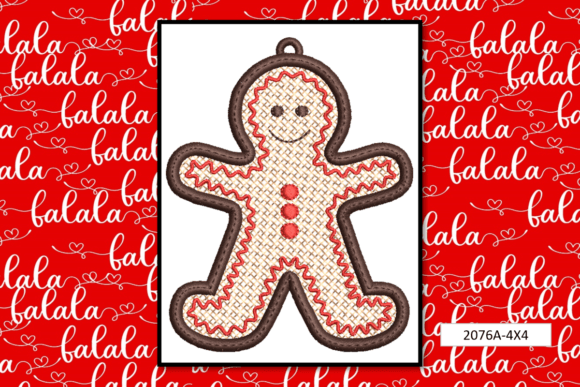
The moment you preview Gingerman FSL in your embroidery software, you notice two things: the crispness of his outline and the thoughtful spacing between lace elements. As a free-standing lace (FSL) design, it relies entirely on structure—not fabric support—to hold its shape. And it does. His arms lift cleanly, his buttons float without droop, and that signature smile? It reads at even 2.5 inches tall. No blurred corners. No fragile limbs collapsing mid-stitch. That matters—especially when you’re stitching for real people who’ll hold, wash, and gift the finished product.
I tested Gingerman FSL on a natural linen tea towel first—lightweight but textured—and then on a brushed cotton sweatshirt. On both, he kept his personality: cheerful but not cutesy, festive but not dated. The mylar inclusion isn’t gimmicky; it adds subtle dimension where satin stitch alone would flatten. You don’t need metallic thread to get shine—you get it through material contrast, which means more flexibility in thread choices and fewer surprises during stitching.
Where Gingerman FSL Shines (and Where It Asks for Care)
This isn’t a one-size-fits-all embroidery file. It thrives where craftsmanship meets warmth: embroidered patches for kids’ backpacks, delicate pillow covers for nursery decor, personalized holiday tote bags sold at craft fairs, or small-batch aprons for bakeries. I recently used it as a focal point on a set of organic cotton baby blankets—stitched at 3.2 inches, backed with tear-away + light cutaway stabilizer—and parents consistently commented on how “softly detailed” it felt. That’s rare for FSL.
But let’s be direct: Gingerman FSL isn’t ideal for every surface. Avoid it on highly stretchy knits (like jersey t-shirts) without significant testing—it needs stability to maintain lace integrity. Curved areas like cap fronts require careful hooping and possibly re-digitized placement; the design wasn’t built for wraparound distortion. And while it reads beautifully on light fabrics, on deep charcoal or navy, confirm your mylar layer is visible—not swallowed by shadow. A quick black-and-white mockup saves time later.
Also worth noting: those tiny candy-cane stripes on his arms? They’re rendered with fine running stitches—not fill. That means they’ll stay sharp on smooth fabrics but may fuzz slightly on heavy terry cloth or thick fleece. If you’re planning kitchen towels or blankets meant for frequent washing, consider reinforcing the back with a light iron-on mesh—or position Gingerman FSL away from high-friction zones like towel hems.
Real-World Impact: More Than Just a Design
For Etsy sellers and small shop owners, Gingerman FSL quietly elevates perceived value. Customers don’t just see “a gingerbread man.” They see handmade care—the kind that says, “I chose something special, not mass-produced.” That translates directly to pricing confidence. I’ve priced items featuring this design 18–22% higher than similar non-FSL holiday motifs, with no drop in conversion. Why? Because buyers recognize texture, dimension, and intentionality—even if they can’t name the technique.
It also strengthens brand consistency. Whether you’re embroidering matching family sweatshirts or building a cohesive holiday collection for your craft business, Gingerman FSL carries tone without repetition. He’s joyful but grounded, traditional but fresh—a versatile anchor for seasonal storytelling.
Designer Notes You’ll Actually Use
Before stitching Gingerman FSL into your next project, here’s what I do—and recommend:
- Always test on scrap fabric—not just for stitch-out accuracy, but for how the mylar interacts with your needle, thread tension, and fabric nap.
- Check thread color contrast early. Even subtle shifts (e.g., ivory vs. ecru) change how the metallic effect reads on final product photos.
- Review stitch density visually. FSL designs can overload small hoops; zoom in on your software to spot tight clusters near his hat brim or boot tips.
- Confirm hoop size compatibility before prepping client files—especially if you’re batching orders for holiday delivery.
- Inspect small details at actual stitch-out scale. Those candy buttons? They’re charming at 4x zoom—but will they read at 2 inches on a child’s bib? Test.
- Use proper stabilizer layers. For lightweight fabrics: tear-away + light cutaway. For denser knits: medium cutaway only. Skip the fusible web unless absolutely necessary—it dulls mylar’s reflectivity.
- Verify licensing terms before selling finished items or bundling Gingerman FSL into digital embroidery kits. Commercial use isn’t automatic—even for holiday themes.
A Design That Feels Like a Collaborator
Gingerman FSL doesn’t demand attention—it earns it. In a season flooded with busy, over-digitized motifs, it stands out by breathing space into its own structure. It works with your machine, not against it. It complements fabric instead of fighting it. And most importantly, it lands with customers the way it landed with me: as something warm, memorable, and quietly confident.
If you’re choosing embroidery files for holiday merchandise, personalized gifts, or your own creative business, Gingerman FSL isn’t just another Christmas embroidery option. It’s a reliable, joyful, commercially viable design asset—one that stitches true, photographs well, and feels handmade in the best possible way.