I Love Dog
First Impressions: Sweet, Simple, and Instantly Recognizable
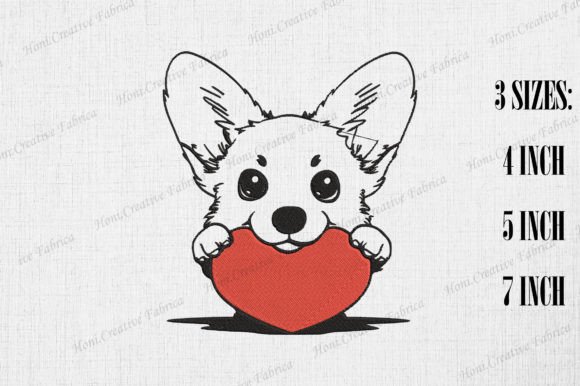
When I opened the I Love Dog embroidery file, what struck me first wasn’t technical precision—it was warmth. The layout is clean and centered: a bold, friendly “I” followed by a heart symbol and “Dog,” all in a gently rounded sans-serif that feels handmade without sacrificing legibility. There’s no clutter—no paw prints, no ribbons, no extra flourishes—and that’s its strength. It reads clearly at 3.5 inches wide, holds up well at 2 inches for baby onesies, and still feels intentional when scaled to 4.75 inches on a tote bag strap. This isn’t a design shouting for attention; it’s one leaning in with quiet sincerity. That makes it unusually versatile—not just for dog lovers, but for makers who value emotional resonance over visual noise.
A Real Project Test: Stitching It on a Linen-Cotton Tea Towel
Last week, I used I Love Dog on a set of kitchen towels for a local boutique launch. We chose natural linen-cotton blend—medium weight, slightly textured, and prone to puckering if stabilizer or stitch density isn’t dialed in. I paired it with medium-weight cutaway stabilizer and tested three thread colors: classic black, warm terracotta, and soft oatmeal. On light fabric, the satin-stitched letters popped cleanly; on darker towels, I swapped to a slightly heavier fill stitch in the heart area to maintain contrast. No letter distortion, no skipped stitches—even across the gentle curve where the towel folded over the rod. Customers responded immediately: “That’s *us*,” said one woman holding her pup’s leash. That kind of quiet recognition? That’s the hallmark of a well-considered machine embroidery design.
Where I Love Dog Shines (and Where It Needs Thought)
- Custom apparel: Works beautifully on crewneck sweatshirts (left chest placement), relaxed-fit tees, and even lightweight denim jackets—especially when stitched with matte poly thread for subtle texture.
- Baby embroidery: Gentle scale and rounded edges make it ideal for onesies and burp cloths. Just avoid dense fill areas near seams where stitching could stiffen folds.
- Embroidered patch: Clean outlines and minimal interior detail mean it patches well onto twill or canvas without excessive bulk.
- Holiday & gift embroidery: Paired with a simple ribbon or stitched beside a monogram, it adds heartfelt personality to stockings, pillow covers, and pet-themed Christmas ornaments.
- Small shop product: As a digital embroidery file, it converts easily into printable mockups for Etsy listings—customers instantly grasp its tone and application.
Use With Care On…
- Stretchy fabric: Requires tear-away + cutaway hybrid stabilizer and reduced top tension. The heart shape can distort under pull—test on scrap knit first.
- Tiny hoops (under 4”): At sub-2-inch sizes, the heart’s curves soften. If you’re stitching on a child’s cap or tiny bib, confirm clarity in your embroidery software preview before hooping.
- Textured or napped fabrics: Fleece, corduroy, or bouclé may obscure fine satin stitch definition—opt for slightly wider letter spacing or add a subtle running stitch outline for lift.
- Dark or heavily dyed fabric: Avoid light thread unless you’re layering stabilizer underneath for opacity. A single-layer fill won’t read clearly on deep navy or charcoal.
What It Adds to Your Finished Product—Beyond the Stitch
I Love Dog doesn’t just say something—it signals something. When stitched onto a handmade apron for a dog trainer’s pop-up stall, it didn’t just identify her niche; it invited conversation. When used on a personalized gift for a friend rehoming a rescue, it carried weight without sentimentality. That balance—playful yet grounded, personal yet broadly relatable—is rare. It elevates a basic tote bag into a statement piece, turns a plain tea towel into a curated kitchen essential, and gives a baby blanket quiet narrative depth. For Etsy sellers and craft business owners, that translates directly to perceived value, repeat engagement, and fewer “Is this machine or hand-stitched?” questions—because the execution feels confident and intentional.
Designer Notes You’ll Actually Use
Before cutting fabric or listing your next batch of embroidered goods, here’s what I do—and recommend—with I Love Dog:
- Run a test on scrap fabric matching your project’s weight and stretch. Watch how the heart anchors and whether letters hold crisp edges after washing.
- Check thread color contrast in both daylight and indoor lighting—some creams disappear on off-white cottons.
- Review stitch density in your embroidery software. If it’s heavy in the heart, consider reducing density by 5–8% for lightweight knits or layered garments.
- Confirm hoop size compatibility. While it fits standard 4×4 hoops comfortably, verify your machine’s max dimensions if using multi-position hoops or commercial frames.
- Inspect small details: the inner curve of the heart, the tail of the “g,” and spacing between “I” and the heart. These define professionalism at close range.
- Test black-and-white mockups for digital listings—this design relies on shape and rhythm more than color, so grayscale previews still communicate its charm.
- Compare performance on light vs. dark backgrounds. If selling digitally, include two recommended thread palettes in your product notes.
- Always use appropriate stabilizer—cutaway for knits, tear-away for stable wovens, and fusible for lightweight linens.
- Verify licensing terms before offering finished items for resale or bundling the file with other design assets.
Final Thought: Not Just a Design—A Reliable Creative Partner
As someone who evaluates hundreds of embroidery files each year, I don’t reach for I Love Dog when I need drama or complexity. I reach for it when I need honesty, ease, and quiet impact—when a client wants to celebrate their dog not with cliché, but with clarity. It works across dogs, embroidery applications, and creative businesses because it respects the maker’s time and the customer’s emotion alike. Whether you’re stitching your first personalized gift or scaling production for a boutique line, I Love Dog delivers exactly what its name promises—without overstating a single stitch.