Music Heart: A Craft Fair Designer’s Real-World Review
First Impression: Romantic, Refined, and Instantly Recognizable
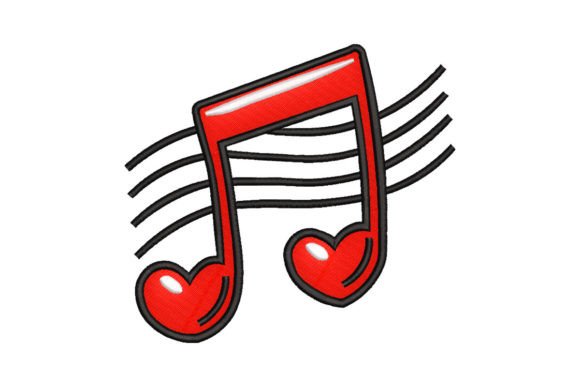
As an embroidery designer who’s prepped over 200 craft fair booths—and shipped thousands of finished products—I opened Music Heart expecting charm. What I got was something sharper: a confident fusion of Valentine S Day sentiment and musical sophistication. It doesn’t lean into kitsch or clutter. Instead, it reads as elegant, soft, and quietly premium—ideal for buyers who want handmade quality without looking “crafty” in the dated sense. That matters on a crowded market table where first-glance clarity wins sales.
Where Music Heart Shines (and Where It Needs Care)
On a tote bag? Absolutely. Centered just below the handle seam, Music Heart becomes a subtle signature—not loud, but unmistakably intentional. It works beautifully at 3.5"–4.5", scaling cleanly without losing definition. On aprons, especially linen or medium-weight cotton, it lands with quiet authority above the pocket. Customers pause there. They touch the stitching. That tactile moment is gold at a craft fair.
Tea towel embroidery is trickier—but Music Heart delivers when placed high on the hem or corner. Its balanced negative space prevents visual competition with towel texture, and its heart-and-notes motif reads clearly even on slightly napped fabric. Avoid centering it on thick terry cloth; stitch density can blur fine lines.
For embroidered patches? Yes—Music Heart is patch-ready *if* you use lightweight cutaway stabilizer and test thread tension. Its clean outer contour and moderate interior detail hold up well in iron-on or sew-on formats. As a cap design? Proceed with caution. The curves of the heart + notes don’t flow naturally across a dome-shaped surface. Best reserved for flat-front panels (like dad caps) or as a small side-embroidered accent—not the crown.
Pillow covers and fabric pouches are standout applications. At 2.75"–3.25", Music Heart reads perfectly on 12"–16" pillows and 5"–7" zippered pouches. It adds just enough personality to feel giftable—especially for musicians, teachers, or couples celebrating anniversaries beyond February 14th.
What Makes Music Heart Sell—Beyond the Theme
This isn’t just another Valentine S Day embroidery file. Its strength lies in versatility: it feels festive *and* timeless. Buyers don’t need a holiday excuse to choose it—they’ll grab it for a music teacher’s gift, a wedding favor, or a “just because” handmade product. That broadens your audience without diluting brand voice.
In booth display, Music Heart strengthens cohesion. Pair it across three items—a navy tote, ivory tea towel, and charcoal pouch—and you’ve built a mini-collection that says “curated,” not “assorted.” That perception lifts perceived value and encourages multi-item purchases.
For Etsy sellers and digital embroidery designers: Music Heart photographs exceptionally well. Its contrast-rich composition (heart outline + interior notes) renders sharply in natural light. No heavy shadowing needed. Use it in printable mockups—it scales cleanly across templates for social ads, listing banners, and email headers. It’s also highly repeatable for batch production: consistent spacing, no overlapping elements, and predictable hoop usage.
Careful-Use Notes Every Embroiderer Should Know
- Dense stitch areas: The inner music notes sit close together—watch for thread nesting on low-tension machines. Test on scrap first.
- Tiny details: While not micro-detail, the note stems and heart curves shrink poorly below 2". Avoid sub-2" placements on patches or small pouches unless you’ve verified clarity on your machine.
- Dark fabric: Use high-contrast thread (e.g., white or silver metallic on navy or charcoal). Standard ecru won’t read.
- Textured towels: Skip terry or heavily woven linens unless you’re using tear-away + light cutaway combo stabilizer.
- Curved surfaces: Caps, curved mugs (for heat-transfer versions), or rounded pillow gussets demand re-digitizing or careful placement—don’t assume default files adapt.
Designer-to-Designer Production Checklist
Before cutting your first fabric piece, do this:
- Test the embroidery file on scrap fabric matching your final product’s weight and weave.
- Check thread color harmony—not just contrast. Does the palette support your shop’s aesthetic? (e.g., blush + sage reads softer than red + black.)
- Verify spacing between heart edge and notes. Tight crowding = skipped stitches on dense fabrics.
- Confirm hoop size compatibility. If your standard hoop is 4x4, ensure Music Heart fits comfortably inside with ⅛" margin.
- Inspect stitch density visually—not just by count. Look for smooth transitions, no thread stacking, and clean note ends.
- Match stabilizer to fabric: cutaway for knits and stretchy totes, tear-away for stable cottons and tea towels.
- Create at least one real mockup—not digital. Hold it. Drape it. See how light hits the stitches.
- Compare fabric colors side-by-side. Ivory vs. off-white vs. cream changes how thread tones appear.
- Confirm commercial licensing applies if selling finished products. This is non-negotiable for craft fair sellers and Etsy shops.
Final Thought: Music Heart Is Booth-Ready—If You Respect Its Rhythm
Music Heart isn’t a “set it and forget it” machine embroidery design. It rewards attention. When executed well—with thoughtful fabric pairing, smart sizing, and tested stabilization—it becomes a silent sales ambassador. It draws eyes, invites touch, and communicates care in every stitch. For handmade product makers building real businesses—not just weekend hobbies—that’s not just embroidery. That’s strategy.