Pine Branches with Three Cones
A Seasonal Embroidery Designer’s First Look
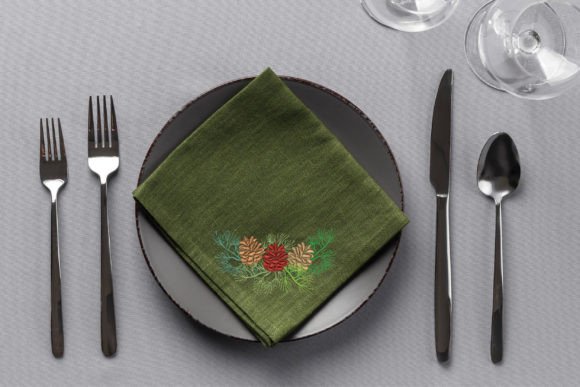
When I opened Pine Branches with Three Cones for the first time, I felt that quiet, grounded warmth unique to early December—crisp air, pine resin scent, soft light filtering through bare branches. This isn’t a flashy, glitter-heavy Christmas embroidery design. It’s understated, organic, and deeply tactile: three dimensional cones nestled among layered pine needles, rendered with thoughtful stitch direction and gentle tapering. The mood is cozy and elegant—not nostalgic or rustic, but quietly premium. It leans into natural texture over ornamentation, making it ideal for buyers who value authenticity in handmade gifts and refined seasonal embroidery.
Where Pine Branches with Three Cones Shines in Real Holiday Product Lines
I’ve already sketched out six product applications where Pine Branches with Three Cones adds instant seasonal appeal and perceived value:
- Sweatshirt embroidery on charcoal or oatmeal fleece—centered above the left chest for subtle sophistication
- Tote bag design scaled large (4.5–5") on natural canvas—ideal for holiday farmers’ markets or gift-with-purchase bundles
- Kitchen towel embroidery at 3.2" on the corner of linen-cotton blends—soft, functional, and photo-ready for Etsy listings
- Pillow cover placement at 4" high on neutral linen—pairs beautifully with cream, sage, or deep burgundy interiors
- Embroidered patch version (3") ironed onto denim jackets or baby blankets—great for family matching sets or gender-neutral newborn collections
- Personalized gift on cotton aprons or table linens—adds heirloom quality without overwhelming the item’s function
This machine embroidery design translates exceptionally well across social media previews and printable mockups. Its clean silhouette reads clearly even in thumbnail size—critical when shoppers scroll Etsy feeds or Instagram carousels during peak gifting season. On craft fair displays, it stands out not by shouting, but by inviting closer inspection: the subtle layering of needles, the weight of each cone, the balance between open space and dense fill.
Smart Placement & Where to Proceed With Care
Pine Branches with Three Cones is versatile—but not universally forgiving. As a seasoned embroidery designer, I recommend caution in these real-world scenarios:
- Small hoop sizes: While the description confirms suitability for small hoops, always verify the smallest included size fits your standard 4"x4" hoop *with seam allowance*. Tiny cones may lose definition below 2.2".
- Thick towels and textured fabrics: High pile or terry cloth can swallow fine needle detail. Use cutaway + tear-away stabilizer combo and reduce top thread tension slightly.
- Dark fabric: Test stitch density first. Dense fills may require fewer underlayers to avoid stiffness. Also test thread colors—forest green or charcoal gray often read richer than black on navy or charcoal.
- Stretchy garments: Avoid placing near side seams or shoulders unless using lightweight knit stabilizer and reduced density settings.
- Metallic thread: The cones’ rounded shape benefits from metallic sheen—but only on medium-density versions. High-density fills increase breakage risk.
It’s also wise to skip curved surfaces like baseball caps unless you confirm the file includes digitized cap-friendly versions. And while Pine Branches with Three Cones works beautifully on baby items, always double-check stitch density for safety—no raised edges or stiff patches near delicate skin.
Why This Design Builds Trust & Drives Holiday Sales
In my experience, holiday embroidery buyers don’t just purchase a digital embroidery file—they buy emotional resonance, reliability, and brand alignment. Pine Branches with Three Cones delivers all three. Its cohesive, nature-rooted aesthetic supports a consistent shop identity—whether you sell minimalist home goods or curated handmade gifts. Customers recognize its calm confidence across products: same motif, different context, unified feeling.
That recognition builds trust fast. When someone sees the same refined pine motif on your kitchen towel, your embroidered patch, and your limited-edition sweatshirt drop, they understand your seasonal embroidery collection is intentional—not assembled from random clipart. That perception elevates perceived value and justifies premium pricing. It also fuels engagement: shoppers tag your shop in “matching family looks,” save your Etsy listing for “next year’s decor,” and share your printable mockup on Pinterest as “quiet Christmas inspo.”
Practical Designer Notes Before You Stitch
Before adding Pine Branches with Three Cones to your holiday lineup, run these checks:
- Test thread colors on both light and dark fabric swatches—especially for the cones, which carry visual weight.
- Confirm hoop size compatibility across all included sizes. Don’t assume “small hoop” means 4"x4"—verify actual dimensions.
- Review stitch density in the fill areas. If cones feel overly dense for your target fabric (e.g., quilting cotton), adjust underlay or reduce density by 5–8%.
- Use proper stabilizer based on fabric texture—not just weight. Linen needs different support than terry cloth or stretch knits.
- Create realistic mockups using actual fabric photos—not just white backgrounds. Show how it looks on a folded kitchen towel or draped over a pillow.
- Inspect small details post-stitch: Are cone tips crisp? Do needle ends taper cleanly? Trim stray threads before photography.
- Plan matching color palettes across your collection—use the same forest green or warm taupe across towels, patches, and apparel for cohesion.
- Confirm commercial licensing before selling finished products. As an Etsy seller or small shop product creator, this protects your business during holiday volume spikes.
Pine Branches with Three Cones isn’t just another holiday embroidery file—it’s a quiet anchor for a thoughtful, scalable seasonal collection. When executed with attention to fabric, thread, and context, it transforms everyday items into meaningful, gift-ready pieces. That’s the kind of seasonal embroidery that sells beyond December—and returns every year.