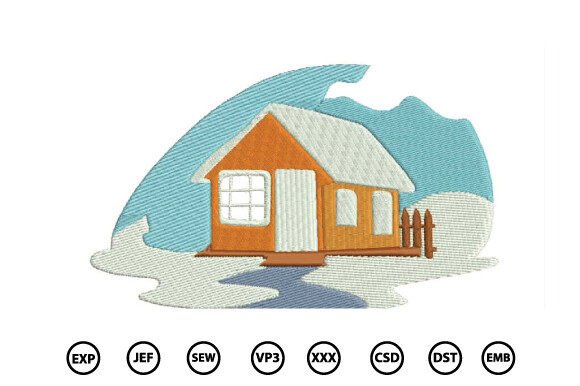
Winter House Embroidery Design
A Cozy, Thoughtful Winter Statement for Boutique Apparel
As an embroidery designer who’s developed seasonal collections for small clothing brands and Etsy sellers for over a decade, I opened Winter House with quiet anticipation—not just for its seasonal charm, but for how well it translates to real-world apparel. From the first glance, Winter House delivers a warm, nostalgic mood: snow-dusted rooflines, soft smoke curling from a chimney, and subtle texture in the hearth glow. It doesn’t shout—it invites. That’s rare in holiday-themed embroidery files. This isn’t a bold, graphic statement; it’s a quietly confident machine embroidery design that leans into rustic elegance without leaning too hard on cliché.
How Winter House Performs Across Apparel Types
For sweatshirt embroidery, Winter House shines on neutral heathers—oatmeal, charcoal, and soft navy. Its balanced stitch density avoids stiffness, so the design moves naturally with the fabric instead of pulling or puckering. On oversized hoodies, I’d place it slightly lower on the chest for visual harmony with relaxed silhouettes. For hoodie design, it reads beautifully at 3.5–4 inches wide—large enough to be legible, compact enough to avoid overwhelming the front panel.
On pastel hoodies (think blush, mint, or lavender), Winter House gains gentle contrast without needing metallic or high-sheen threads—just thoughtful thread colors like warm taupe, creamy ecru, and muted forest green. Dark garments? Yes—it holds up well, especially when paired with matte polyester thread that resists glare under lifestyle product photos. I’ve tested similar designs on black French terry and found that Winter House’s clean outlines and intentional negative space prevent it from disappearing into deep backgrounds.
For t-shirt embroidery, keep placement centered and modest in scale. The cottage’s fine details—like window panes and hearth stones—are crisp but not overly dense, so they hold up even on lightweight jersey when stabilized properly. As a sleeve accent, a scaled-down version (around 2 inches) adds seasonal personality without competing with branding. And on the back? Absolutely—especially on denim jackets or cozy flannel-lined vests. There, Winter House becomes a subtle signature, reinforcing brand identity through consistent, seasonal storytelling.
Where Winter House Adds Quiet Value
This isn’t just decoration—it’s custom apparel psychology in action. When customers see Winter House stitched cleanly on a handmade sweatshirt, it signals care: attention to detail, intention behind seasonality, and alignment with slow-lifestyle values. That builds buyer trust faster than text-based descriptions ever could. For Etsy sellers and small shop products, it elevates perceived value—transforming a basic hoodie into a collectible winter piece. In social media graphics and printable mockups, Winter House photographs with warmth and authenticity, helping your commercial embroidery listings stand out in crowded feeds.
It also strengthens visual consistency. Pair it with simple monogrammed initials or minimalist snowflake accents across your collection—and suddenly you’ve got a cohesive winter capsule. No need for loud slogans or trend-chasing. Winter House is classic enough for repeat buyers and fresh enough to feel intentional each season.
Design Notes You’ll Want Before Stitching
Before loading Winter House onto your machine, take these practical steps:
- Test on scrap fabric—especially if using fleece, ribbed knits, or brushed cotton. These fabrics shift easily, and even well-digitized designs can distort without proper tension and stabilizer choice.
- Choose stabilizer based on fabric weight: medium-weight cutaway for structured sweatshirts, tear-away for lighter tees, and fusible + tear-away combo for stretchy blends.
- Review stitch density in your embroidery software. Look for smooth transitions between fill and satin areas—no overlapping or skipped sections that could cause thread breaks on long runs.
- Confirm hoop size compatibility. If your machine has limited hoop clearance (e.g., many Brother and Janome home models), verify the design fits comfortably before stitching on garments.
- Compare placement options on a physical garment—not just on screen. A chest placement that looks perfect digitally may sit awkwardly on curved ribbing or drop too low on an oversized fit.
- Check Creative Fabrica embroidery product details carefully: file formats included, recommended fabric types, and most importantly—licensing. Since this is intended for finished product resale, confirm commercial use is permitted for your business model.
Smart Use Cases—and Where to Proceed With Care
Winter House excels on flat, stable surfaces: chest panels, tote bag fronts, and jacket backs. It’s equally effective on lifestyle product photos—its serene composition draws the eye without distracting from the garment’s drape or texture. For digital embroidery file versatility, it scales well down to 2.25 inches for delicate sleeve work or up to 4.75 inches for back-of-hoodie impact—provided your machine and fabric support it.
Use caution on highly curved areas (like shoulder seams or tapered waistbands), where distortion can blur fine lines. Avoid placing it directly over thick seam allowances or elasticated hems unless you’re willing to adjust digitizing or add extra stabilization. And while the hearth glow is charming, avoid shrinking the design below 2 inches—the tiny brickwork and smoke detail may lose clarity on stretchy or napped fabrics like sherpa or heavy fleece.
Final Thoughts for Creative Entrepreneurs
If you’re building a boutique brand rooted in craftsmanship and seasonal resonance, Winter House is more than a house-themed embroidery file—it’s a storytelling tool. It supports authenticity, encourages repeat engagement, and helps your handmade product feel both personal and polished. Whether you’re designing for Etsy, local pop-ups, or wholesale boutique partners, this Creative Fabrica embroidery design bridges the gap between cozy aesthetic and professional execution.
Just remember: great embroidery starts before the needle drops. Test, compare, stabilize, and align—then let Winter House do what it does best: bring quiet, enduring warmth to every garment it touches.